
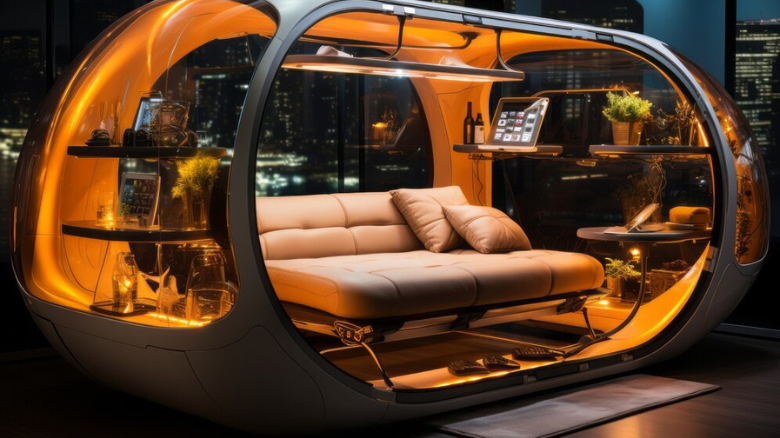
Imagine a living space where your furniture not only complements your style but also interacts with the environment and enhances your daily life. As the world increasingly leans into technology, the evolution of furniture is shifting gears, blending innovation with aesthetics. The rise of smart and tech-integrated pieces is more than just a trend; it’s a revolution in how we perceive and utilise our living spaces. These advancements promise a future where furniture adapts, learns, and evolves with us. What if your chair could adjust to your posture, or your coffee table could charge your devices effortlessly?
The Future of Furniture: Smart and Tech-integrated Pieces
The convergence of technology and furniture design is ushering in an era where our living spaces become more interactive and responsive. This isn't merely about adding a few extra features or fancy gadgets; it's about rethinking how we engage with our environments. The future of furniture lies in its ability to seamlessly integrate into our tech-driven lifestyles, enhancing convenience, comfort, and sustainability. But what does this fusion of form and function look like, and how is it shaping the way we live?
The Rise of Smart Furniture:
Smart furniture is no longer a concept of the distant future. It's here, and it's transforming our homes and workplaces. Imagine a couch that adjusts its firmness based on your preferences, or a table that doubles as a wireless charging station. These advances are not only practical but also cater to the tech-savvy and environmentally conscious consumer. According to a recent study, the global smart furniture market is projected to grow at a compound annual growth rate of over 21% between 2021 and 2028. This surge is driven by the increasing demand for multifunctional furniture that saves space and enhances efficiency.
The integration of Internet of Things (IoT) technology plays a crucial role in this transformation. IoT-enabled furniture can communicate with other smart devices in your home, creating a cohesive ecosystem that responds to your needs. For instance, a smart bed can monitor your sleep patterns and adjust the room lighting or temperature for optimal rest. This level of connectivity not only improves convenience but also contributes to a more personalised living experience.
Connectivity and Functionality:
As homes become smarter, the demand for furniture that complements this connectivity grows. Tech-integrated pieces are designed to offer more than just aesthetic appeal; they provide enhanced functionality that aligns with a digitally connected lifestyle. Consider a work desk equipped with built-in power outlets, USB ports, and wireless charging pads. Such features are becoming standard, catering to the needs of remote workers and digital nomads.
Moreover, the incorporation of voice-activated controls and AI-driven features is making furniture more intuitive. You can now control lighting, adjust seating positions, and even receive reminders through your furniture. This seamless integration of technology not only simplifies tasks but also enriches the user experience, creating a harmonious blend of form and function.
Sustainability and Innovation:
The future of furniture is not just about technology; it's also about sustainability. As consumers become more environmentally conscious, the demand for eco-friendly materials and sustainable practices is on the rise. Furniture manufacturers are responding by using recycled materials, sustainable wood, and non-toxic finishes. Innovations like modular furniture, which can be easily disassembled and reconfigured, offer flexibility and reduce waste.
Additionally, advancements in materials science are leading to the development of furniture that is not only durable but also biodegradable. Imagine a chair made from bio-plastic that can decompose at the end of its lifecycle. Such innovations not only reduce the environmental impact but also appeal to the growing number of consumers who prioritise sustainability in their purchasing decisions.
Future Trends in Design:
The future of furniture design is bright, with trends pointing towards increased customisation and personalisation. Augmented reality (AR) is playing a significant role in this shift, allowing consumers to visualise how a piece of furniture will look in their space before making a purchase. AR apps enable users to place virtual furniture in their homes, offering a risk-free way to experiment with different styles and layouts.
Interactive design elements, such as touch-sensitive surfaces and colour-changing materials, are also gaining traction. These features allow furniture to adapt to different moods and occasions, providing a dynamic and versatile living environment. As these technologies become more accessible, they will continue to blur the lines between traditional and futuristic design, creating spaces that are both functional and aesthetically pleasing.
Conclusion:
The future of furniture is an exciting frontier, where technology and design converge to create spaces that are not only beautiful but also intelligent and sustainable. As smart and tech-integrated pieces become more prevalent, they will redefine our relationship with our living environments, offering new levels of convenience, comfort, and customisation.